
The Nuestra Señora de Candelaria University Hospital has reached nine hundred liver transplants since the program was launched in 1996. In this way, the hospital complex carries out an average of 31 liver transplants per year. In 2016, the annual maximum was reached, with fifty transplanted patients.
Most of the patients undergoing this type of intervention are between 45 and 65 years old. Of the total transplanted, 73% are males, a figure that is due to the higher prevalence of liver pathologies in this gender, as indicated by the Hospital in a statement.
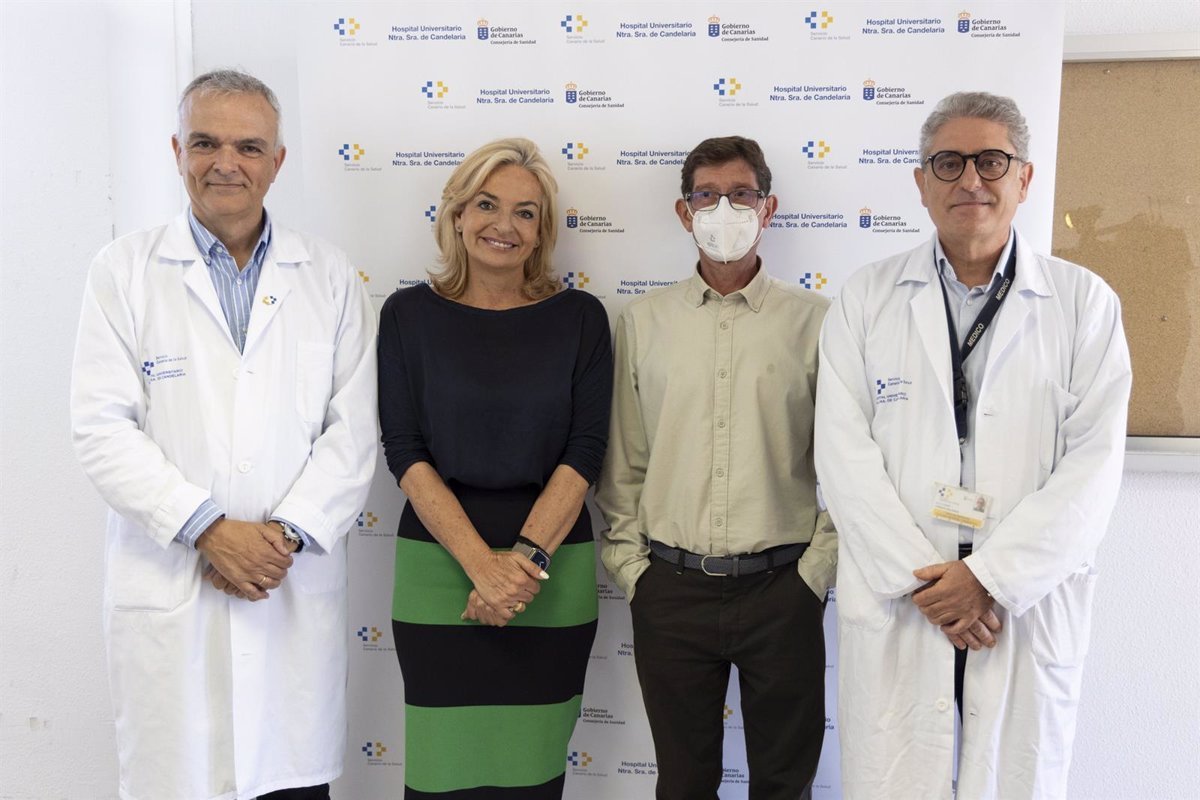
The healthcare center brought together the team involved in this liver transplant program on Thursday to analyze the work and objectives achieved, in a meeting attended by the Health Minister of the Government of the Canary Islands, Esther Monzón, and the hospital’s managing director, Roberto G. Pescoso.
The minister highlighted the «excellent results» achieved by this program and the «high» number of transplants carried out, which represent «a milestone for the Archipelago.»
She added that transplant programs «exemplify like no other the teamwork» and pointed out that the Canary Islands «continue to have record numbers of organ and tissue donors.»
On the other hand, the manager of the hospital complex congratulated the team that is part of the Liver Transplant Program, while highlighting the «scientific, professional, and technical rigor» of the workers who have participated in this unit for almost three decades.
Also present at the event were the head of the General and Digestive Surgery and Liver Transplant Service, Julio Jordán; the head of the Hepatobiliary-Pancreatic Surgery and Liver Transplant Section, Ayaya Alonso; and the transplant coordinator, Paula Ventura.
In addition, the director of the Tenerife Health Area, Rafael Martín, and the medical director and nursing director of Primary Care in Tenerife, Mónica Delgado and Nayra García, as well as the manager of the University Hospital of the Canary Islands, Adasat Goya, attended.
One of the patients who received a liver transplant at the Nuestra Señora de Candelaria University Hospital, Fernando Blasco, detailed his experience while thanking the entire team of professionals for their work.
He also mentioned the families of the donors and thanked them «from the heart» for the important decision they make in such a delicate moment. Therefore, and in a special mention to the donors and their families, their «invaluable generosity» and «clear leading role» in the process have been recognized.
PATIENT PROFILE
The Hospital reminds that the pathologies that can lead to the need for a liver transplant are cirrhosis, autoimmune diseases, hepatocellular carcinoma, and hepatitis viruses, among others.
The survival rate of transplanted patients is 90% in the first year and 78% at five years. These figures reflect «a very significant» increase in life expectancy because, if the patient does not receive a transplant, it would be less than three years, and if the condition is severe, less than a year.
This high survival rate, which has been increasing over time, is due to several factors, including a decrease in the duration of interventions.
It also influences the reduced need for blood transfusions during surgery, both due to better surgical times and changes in techniques. Additionally, the existence of new immunosuppressants with fewer side effects that have reduced the rejection rate is highlighted.
The emergence of direct-acting antivirals against hepatitis C, the use of extracorporeal perfusion devices, and donation after circulatory death are other advances that the Hospital has embraced. With these, the hospital center ensures that both the numbers of cirrhosis attributable to hepatitis C, as well as surgery and the number and maintenance of donors, have improved.
In addition to the clinical impact, it is pointed out that all these advances have allowed the possibility of participating in research projects at both national and international levels.
