The exhibition ‘La ruta canaria, 30 años de migración y muerte’, organized by the Government of the Canary Islands with 12 photojournalists who bear witness to the migratory phenomenon in the archipelago over the past three decades through 80 photographs, arrived this Friday at the Museum of Nature and Archeology (MUNA).
Tenerife is the third island to host the exhibition, after being presented last August at the Faro de la Entallada (Fuerteventura), and after its visit to Casa África in Las Palmas de Gran Canaria, where it became the most viewed exhibition in history during the month it was open to the public, with nearly 1,000 visitors.
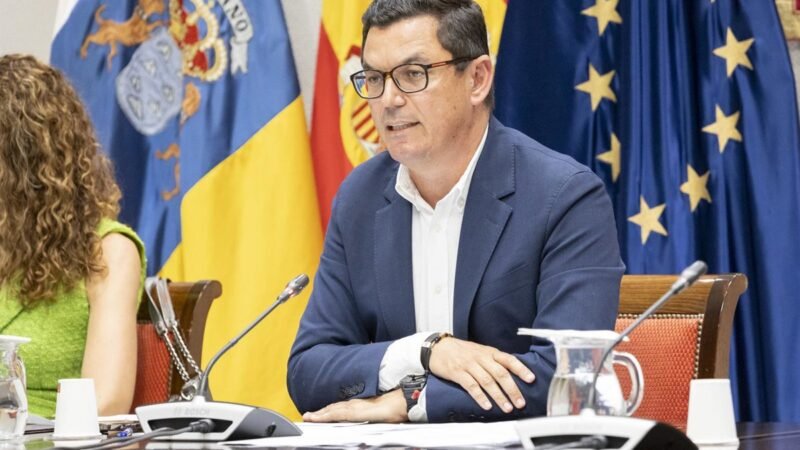
At the inauguration, the Deputy Minister of the Presidency, Alfonso Cabello, urged not to lose sight of the human drama generated by the migratory phenomenon because «behind each figure, behind each of the boats that arrive at the islands, there are people who need a dignified response, especially children.»
Cabello also emphasized that «these images, in addition to documenting the migratory reality, show that the Canary Islands need solidarity and commitment, both from the State and from the rest of the autonomous communities and the European Union,» because the realistic view of the media, and in this case of the photojournalists, «remind us that the migratory drama is structural.»
The Deputy Minister insisted that «the exhibition should help stir consciences and gather consensus to provide the response that the people arriving in Europe through the Canary Islands deserve, especially children.»
On her part, the curator of the exhibition, the photojournalist Desirée Martín, emphasized the positive reception that the exhibition is having, with its main focus remaining on «the fight against misinformation.»
The photographs, she explains, «not only reflect the arrival of migrants, but also their life journey until reaching the islands.»
THE MOST DANGEROUS ROUTE
In August 2024, three decades had passed since a boat departed from the coast of Western Sahara and reached Las Salinas del Carmen, in Fuerteventura, with two people on board, opening a corridor between Africa and the Canary Islands that has become the most dangerous and deadliest in the world.
The exhibition takes us on a journey through the migratory movement in the islands, showcasing texts from the authors of the photographs as supportive elements for understanding the journey that migrants make, as well as providing context on the reasons that drive them to leave their country.
These images, as noted by the Canarian Communication Award winner, José Naranjo, «have the strange virtue of portraying them, but also us; by shielding ourselves, we turn the natural dream of migrating into an odyssey of survivors and the dead.»
This collection of snapshots, the journalist believes, «is a duty of memory; it’s not just about peeking and looking, it’s about truly seeing. Only through a global understanding of the migratory phenomenon, its complexity linked to a deeply unjust world, can we react.»
AN ENRICHING EXHIBITION
After its visit to Casa África, the exhibition «has been evolving» with the addition of new elements, offering in Tenerife a true documentary of the human migratory movement.
The MUNA provides a historical perspective on migration and will feature an animated installation on the Atlantic current from the early settlers of the Canary Islands for a better dissemination of this process.
The exhibition will also include a historical look at the migration of Canary Islanders to South America.
Likewise, activities will be carried out around this exhibition for school groups visiting, consisting of educational dynamics where there will be «feedback on their feelings,» as mentioned by Desirée Martín.
Additionally, three guided tours by the authors (on March 29, April 5, and May 3) and a masterclass by Andrés Gutiérrez on Photojournalism and migration will be organized.
There will also be a meeting with various individuals involved in the initial care provided to migrants once they are located at sea and once they set foot on land.
In addition to the Deputy Minister of the Presidency, Alfonso Cabello, other participants at the inauguration included the Deputy Minister of the Presidency’s Office, Octavio Caraballo; the Councilor for Culture and Museums of the Tenerife Island Council, José Carlos Acha; and the Museum Director, Conrado Rodríguez.
The exhibition can be visited at the Museum of Archeology and Nature (MUNA) from March 14 to May 18.
ETHICAL JOURNALISM
Among the activities organized within the framework of the exhibition ‘La ruta canaria, 30 años de migración y muerte,’ the MUNA hosts the presentation of the book ‘Tratamiento ético de la inmigración en los medios,’ by the professor at the University of La Laguna (ULL), Rodrigo Fidel Rodríguez Borges.
In this sense, the guide analyzes the discourse against immigration and pays special attention to how the media portray this reality.
Rodríguez Borges also proposes 10 criteria of action that can help media professionals and journalism students improve their work from the perspective of communication ethics and human rights.